
Maintaining optimal tyre health requires more than just preserving correct inflation pressures. Wheel balancing ensures that weight is distributed equally around the circumference of the tyre and wheel assembly. When this equilibrium is disrupted by even a few grams, it can lead to perceptible driveability issues. Recognising the signs of unbalanced wheels early can prevent premature component wear and safeguard your vehicle’s handling dynamics.
1. Steering Wheel and Floorboard Vibrations
The most prevalent indicator of wheel imbalance is a distinct vibration felt through the steering wheel or the vehicle’s floorboards and seats. Typically, these oscillations become pronounced at specific speeds, often manifesting around 50 to 60 mph, and intensifying as velocity increases. If the front wheels are unbalanced, you are more likely to feel the feedback in your hands; if the rear wheels are out of balance, the vibration is often isolated to the seats or floor pan.
2. Uneven Tyre Wear
When a wheel is unbalanced, it does not rotate smoothly. Instead, it subjects the rubber to uneven vertical forces, causing sections of the tread to hit the road surface with greater impact. This results in ‘cupping’ or scalloping—distinctive depressions worn into the tyre tread. Regularly checking tyre tread depth and wear patterns is essential; ignoring this symptom will drastically shorten the lifespan of your tyres and compromise wet-weather grip.
3. Reduced Fuel Efficiency
An unbalanced wheel generates increased rolling resistance because the vehicle must work harder to maintain momentum against the erratic, wobbling motion of the tyre. This inefficiency forces the engine to consume more fuel. If you observe an unexplained decline in your vehicle’s miles per gallon (MPG), combined with mild vibrations, your wheel assembly is likely demanding professional attention.
4. Accelerated Suspension and Bearing Wear
The constant, high-frequency stress generated by an unbalanced wheel assembly puts immense strain on the wheel bearings, steering linkages, shocks, and struts. Over time, these components will degrade prematurely. This damage can be severely exacerbated if the imbalance was caused by a sudden impact, such as hitting a kerb or suffering one of the night-time pothole blowouts common on city roads.
5. Poor Handling and Steering Responsiveness
An unbalanced tyre struggles to maintain consistent contact with the tarmac, resulting in a less predictable steering response. You may experience a ‘loose’ sensation in the steering or find that the vehicle feels less stable during high-speed cornering. If accompanied by structural trauma such as tyre sidewall damage, the overall structural integrity of the wheel assembly is severely compromised, demanding immediate professional inspection.
How to Resolve Wheel Imbalance
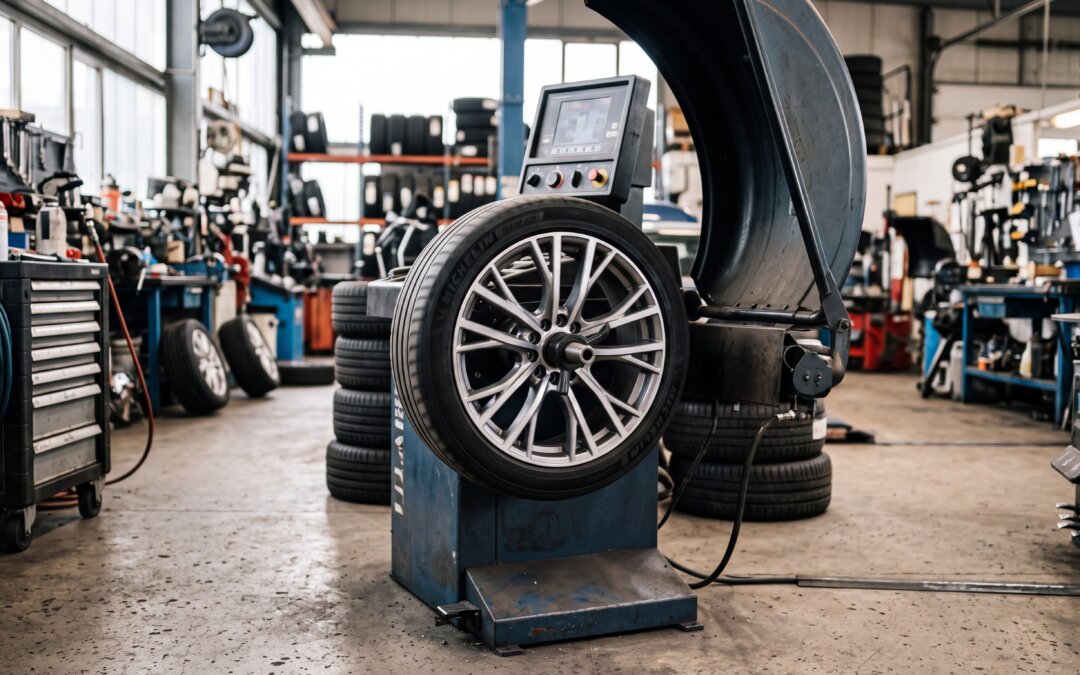
Correcting unbalanced wheels is not a task that can be easily undertaken at home, as it requires highly specialised diagnostic machinery. A technician must place the wheel assembly on a balancer, which spins the tyre to identify the exact heavy spots. Small, precise counterweights are then affixed to the wheel rim to equalise weight distribution.
Fortunately, you do not need to drive a vibrating vehicle to a garage. Opting for a professional mobile wheel balancing service allows expert technicians to perform this calibration on-site, whether at your home or workplace. Should you require your wheels to be removed and lack the secure key, technicians can also provide expert locking wheel nut removal to ensure the process is seamless and damage-free.
